Call Tracking & Call Campaigns in Google Ads 2026: Measure Calls, Stop Wasting Budget
For many advertisers the phone call is an analytics blind spot: budget is spent, leads arrive, but tying a specific call back to a campaign, keyword and ad is impossible. In 2026, with more signal lost to privacy changes, call tracking becomes one of the most reliable ways to measure real demand and lead quality. Here is how to build call campaigns in Google Ads the white-hat way — no policy circumvention, just clean analytics and optimization.
Why calls are an underrated conversion source
In high-ticket niches (legal, medical, auto, real estate, B2B) users call more often than they fill in a form. If those calls are not digitized, Smart Bidding trains on incomplete data and undervalues your most profitable queries. Call tracking closes that gap: every call becomes a conversion with a source, duration and quality status.
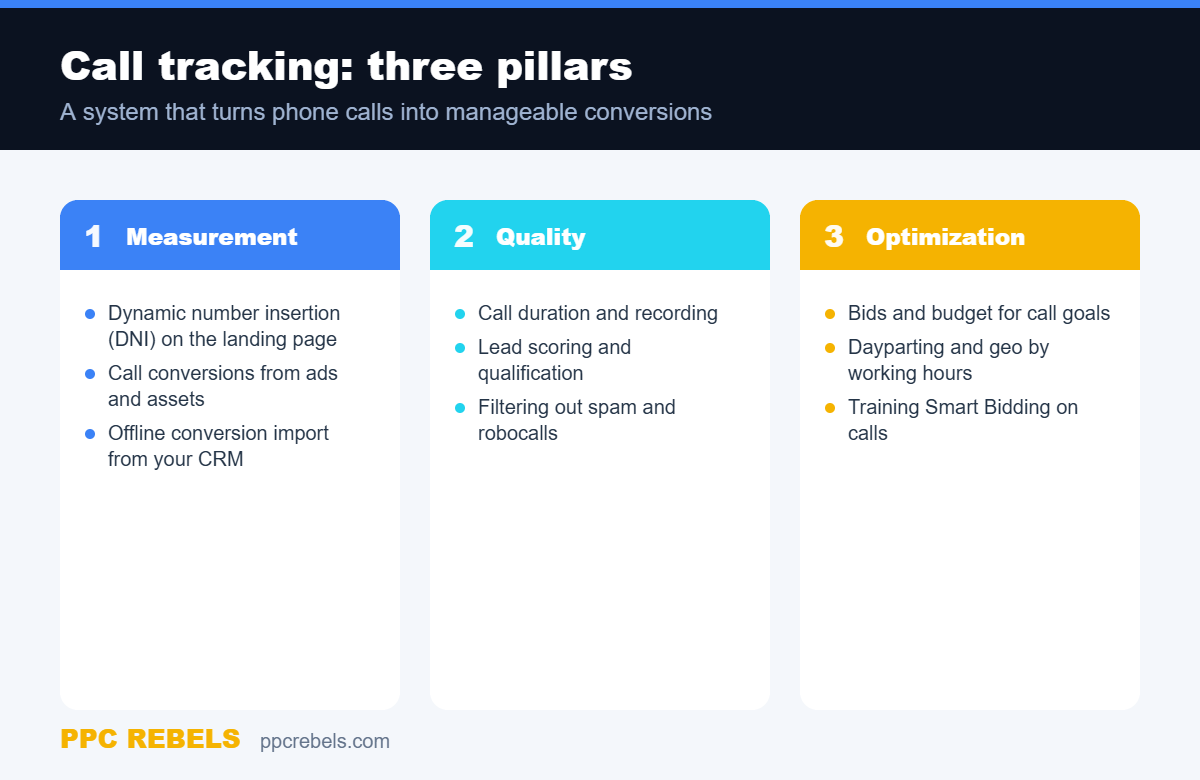
How call tracking works: three pillars
A working call-analytics system rests on three pillars — measurement, quality and optimization. Below is the schema we use as a checklist when auditing call campaigns.
Static vs. dynamic tracking
A static number is tied to a channel (for example, a dedicated number for Google Ads). Dynamic number insertion (DNI) goes further: each visitor sees a unique number, letting you connect the call to the session, campaign and even the keyword. For paid traffic, DNI is almost always preferable because it delivers precise attribution.
What counts as a conversion
Not every call is equally valuable. Set a minimum duration (say 60 seconds) as the quality threshold, separate first-time enquiries from repeat calls, and import deal status from your CRM. That way you optimize for revenue rather than for ringing phones.
Setting up call campaigns in Google Ads
- Enable call assets (extensions) and call-only campaigns for mobile demand.
- Track calls from ads and from the website via Google call conversions.
- Connect form and call into one funnel — see our guide to native lead forms.
- Make sure your landing page for paid traffic shows the number fast and tap-to-call on mobile.
Analytics and lead quality
A call without tagging is useless for optimization. Feed call data into analytics and tie it to your attribution model — as covered in our piece on GA4 attribution for media buyers. Lead scoring (by duration, recording and deal outcome) filters out spam and robocalls and builds audiences for bid adjustments.
Bidding on calls
Once qualified calls are imported as conversions, let smart bidding optimize toward them. Choose a strategy that matches your goal and value — compare options in our overview of Google Ads bidding strategies. Show the number only during working hours so budget is not lost on missed calls.
Compliance and call recording
Call recording is sensitive. Stay white-hat: disclose recording, store data under the privacy rules of your jurisdiction, and never use phone lists without consent. White-hat call tracking measures inbound demand — it is not cold calling.
Common mistakes
- One number across all channels — attribution is lost.
- Every call counts as a conversion, including 5-second ones — the bidding model learns from noise.
- No CRM deal-status import — you optimize for leads, not revenue.
- The number shows around the clock while the call center is closed.
FAQ
How is a call campaign different from a regular one?
A call-only campaign drives the user straight to a call without a site visit and optimizes for the “call” goal. A regular campaign drives to a landing page where the call is one of several conversions.
Does a small business need dynamic call tracking?
With little paid traffic you can start with static numbers per channel. As volume grows and you run several campaigns, move to DNI for precise attribution.
How do I avoid wasting budget on spam calls?
Set a quality-duration threshold, filter repeat calls, and exclude spam numbers. Optimize bids toward qualified calls rather than every ring.
Call tracking is a measurement discipline. It does not “hack” the algorithms — it gives them honest data about real demand so Google Ads works for your revenue.